Explore the Wonders of Universe
Capturing the beauty of planets and stars through stunning photography and research
36 Years of Research in field of astronomy
Quetta, Pakistan


Syed Mohammad Baqir
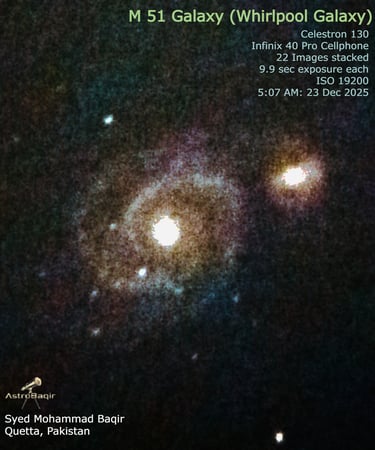
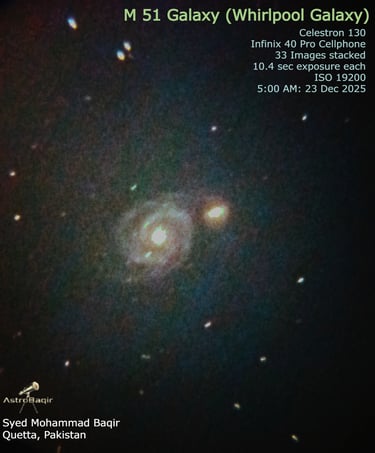
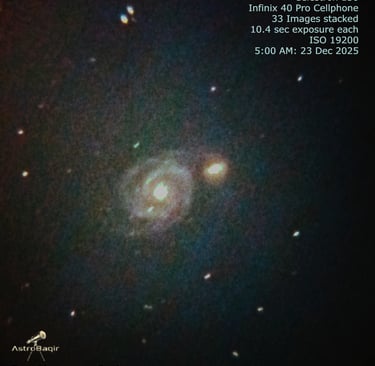
Whirlpool galaxy (M 51)
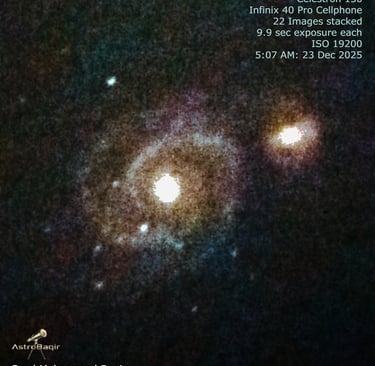
Captured from Quetta, Pakistan, this image shows the famous Whirlpool Galaxy (M51) interacting with its smaller companion NGC 5195. Located about 23 million light-years away in the constellation Canes Venatici, M51 is a classic grand-design spiral galaxy, known for its well-defined spiral arms rich in star-forming regions.
The glowing core and faint spiral structure visible here are the result of gravitational interaction between the two galaxies, which triggers intense star birth and distorts their shapes over cosmic time. Observing such a distant island universe with modest equipment highlights how powerful patience, stacking, and curiosity can be.
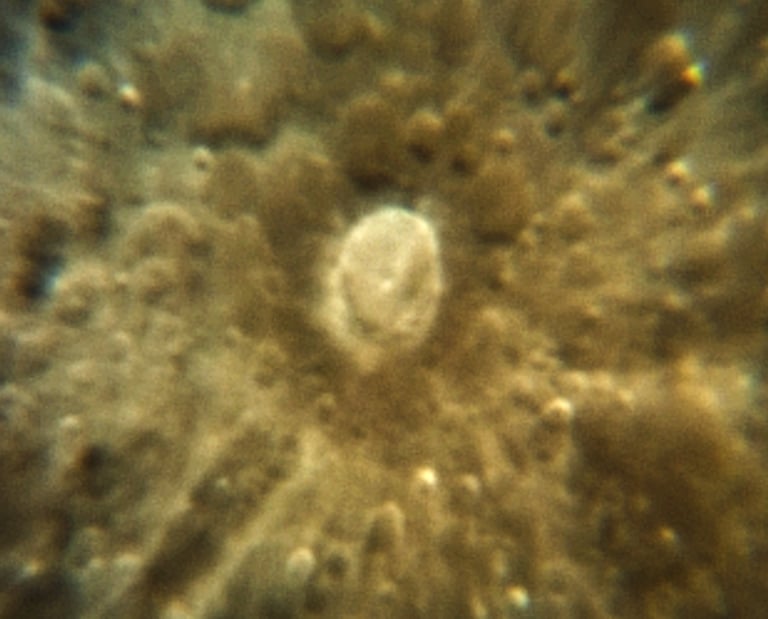
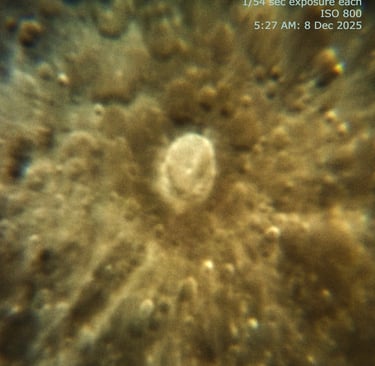
Tycho Crater, Moon
This image captures the Tycho Crater, one of the Moon’s most prominent and geologically significant impact features, observed on 8 December 2025 using a Celestron 130 telescope and an Infinix 40 Pro cellphone. By stacking 24 short-exposure frames, the complex structure of Tycho becomes visible — including its sharply defined central peak, rough inner walls, and the extensive ray system that radiates outward for more than 1,500 kilometers across the lunar surface. Estimated to be about 108 million years old, Tycho is relatively young in lunar geological terms, which is why its rays remain bright and well-preserved. The crater itself spans 85 kilometers in diameter and reaches a depth of 4.8 kilometers, formed by the high-velocity impact of a large asteroid during the late Copernican period. This photograph highlights how even small amateur setups can reveal detailed lunar morphology, offering a direct view into the Moon’s violent impact history and its dynamic geological past.
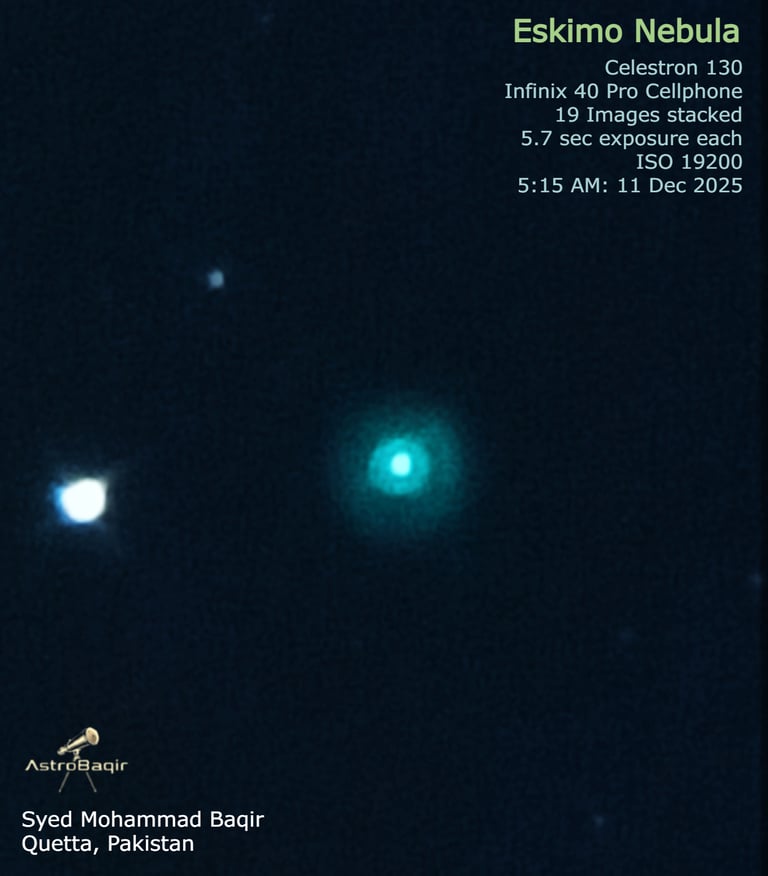
Eskimo Nebula, Amazing Capture
Eskimo Nebula (NGC 2392) — A Dying Sun-Like Star in Its Final Breath
Captured on 11 December 2025 | 5:15 AM | Quetta, Pakistan.
This morning I imaged the Eskimo Nebula (NGC 2392) — a beautiful planetary nebula formed when a Sun-like star expelled its outer layers near the end of its life. Using my Celestron 130 and Infinix 40 Pro, I stacked 19 images, each with a 5.7-second exposure at ISO 19,200, to bring out its glowing shell.
Scientific Details:
• Type: Planetary Nebula (expelled outer atmosphere of a dying star)
• Distance: ~2,870 light-years in constellation Gemini
• Diameter: About 0.3 light-years across
• The bright central star is a hot white dwarf with a surface temperature near 40,000°C
• Its outer shell glows due to ionized gases, mainly hydrogen, helium, oxygen, and nitrogen
• The nebula is expanding at roughly 70 km/s, meaning it formed only a few thousand years ago
• Planetary nebulae like this show what will happen to our own Sun in ~5 billion years.
Though my equipment is modest, the image still captures the nebula’s characteristic bright core and faint outer halo, a cosmic snapshot of a star shedding its final layers before fading into a white dwarf.
Celestial Gallery
Explore stunning images of planets, comets and Sun captured by me.










© 2025. All rights reserved.